Fixed vs. Adjustable-Rate Mortgages: Which Is Better in 2026?
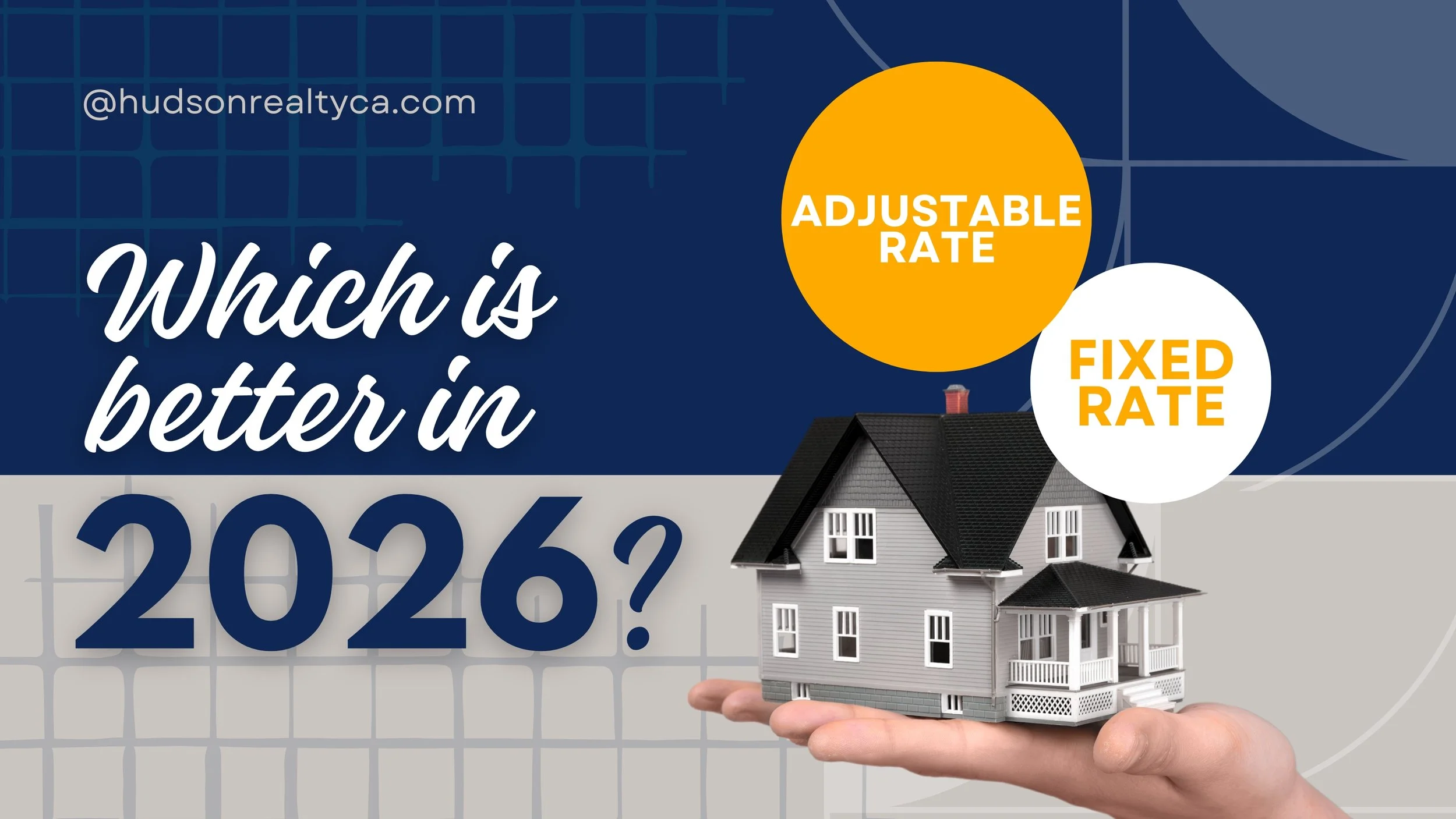
When you’re buying a home, one of the most important decisions you’ll make is choosing the right type of mortgage. Your choice can affect your monthly payment, long-term financial stability, and overall cost of homeownership. In 2026, the answer isn’t one-size-fits-all; it depends on market conditions, personal goals, and how long you plan to stay in your home.
Let’s break down the key differences between fixed-rate and adjustable-rate mortgages (ARMs), and explore which might make more sense for you in the year ahead.
WHAT’S THE DIFFERENCE?
Fixed-Rate Mortgage (FRM):
A fixed-rate mortgage locks in the same interest rate for the entire life of the loan, typically 15 or 30 years. That means your monthly payment remains consistent, making it easier to budget and plan for the long term. This stability can be especially appealing in uncertain economic conditions.Adjustable-Rate Mortgage (ARM):
An ARM starts with a lower interest rate for a set period (usually 5, 7, or 10 years) and then adjusts periodically based on broader market conditions. Because the rate can rise or fall after the initial period, ARMs carry more uncertainty, but they can offer lower initial payments compared with fixed rates.
2026 MARKET OUTLOOK: WHAT BUYERS ARE FACING
Experts expect interest rates and borrowing costs to remain a key consideration for homebuyers in 2026. While the Federal Reserve cut its benchmark rate in late 2025, and is expected to make at most one more rate cut in 2026. And anything varying from that will depend upon factors at that time.
Mortgage rates have hovered just above 6% for popular long-term loans like the 30-year fixed mortgage, with recent data showing slight declines to near 6.2%. This trend reflects both Federal Reserve actions and investor behavior tied to long-term Treasury yields.
At the same time, forecasts suggest that home price growth may moderate while wages grow faster in 2026, which could improve overall affordability for many buyers, even if rates don’t dramatically fall. (Forecast details drawn from wider market projections.)
FIXED RATE: Is It Still Worth It in 2026?
Advantages of Fixed-Rate Mortgages:
Predictability: Your interest rate and monthly payment stay the same for the entire loan term, providing peace of mind.
Budget Friendly: Especially helpful if you plan to live in your home long-term or want protection against rising rates.
Strong Protection: When market rates spike, your fixed rate shields you from increased borrowing costs.
Considerations:
Fixed rates tend to be higher than initial ARM rates, meaning your early payments could be higher even if they’re stable.
Although mortgage rates may seem high compared to a few years ago, historically, rates in the 6% range were not uncommon.
ADJUSTABLE RATE: When It Might Work in Your Favor
Advantages of ARMs:
Lower Initial Rates: ARMs often start with a lower rate than fixed loans, which can reduce early monthly payments.
Short-Term Buyers Benefit: If you plan to sell or refinance before the rate adjusts, you could save money.
Considerations:
After the initial fixed period, your rate can rise, potentially significantly, based on market conditions.
You take on more risk if rates climb while your income or financial goals haven’t changed
In a 2026 environment where rates may trend modestly lower but still stay above historical lows, an ARM could benefit buyers who expect to move or refinance within a shorter timeframe, provided they understand the risk.
WHICH IS BETTER FOR YOU?
There’s no universal answer, but general guidance for 2026 looks like this:
Choose a Fixed-Rate Mortgage if:
You plan to stay in your home for many years
You value payment stability above all
You want protection from future rat increases
Choose an Adjustable-Rate Mortgage if:
You expect to sell or refinance before rate adjustments occur
You want lower initial payment
You’re comfortable with some uncertainty in your long-term costs
Ultimately, your financial situation, risk tolerance, and time horizon should guide your choice. Talking with a trusted mortgage professional can help you estimate your costs under each scenario and decide what fits best.
References:
• Fixed-rate vs adjustable overview: Investopedia (paraphrased comparison). https://www.investopedia.com/mortgage/mortgage-rates/fixed-versus-adjustable-rate
• Freddie Mac mortgage rate averages reflecting trends near 6.2%. https://www.freddiemac.com
• Federal Reserve rate expectations through 2026. https://www.reuters.com/business/view-divided-fed-cuts-rates-expected-sees-only-one-reduction-2026-2025-12-10
• Housing forecast suggesting affordability may improve. https://www.realtor.com/news/trends/housing-forecast-2026-mortgage-rates-affordability-improves
